
Sports
Rotator cuff: symptoms, exercises and when to see a physiotherapist
Pain when lifting your arm or sleeping on your side may come from the rotator cuff. What it is, symptoms, when to see a doctor and how guided exercise helps.
Short answer: the rotator cuff is a group of four muscles and their tendons that stabilise and move the shoulder. When it is irritated or injured, it usually hurts to lift the arm, to sleep on that side or to reach behind your back. In many cases the first-line approach is progressive, guided exercise and load management; the assessment decides whether that fits your case or whether you should see a doctor first.
What is the rotator cuff?
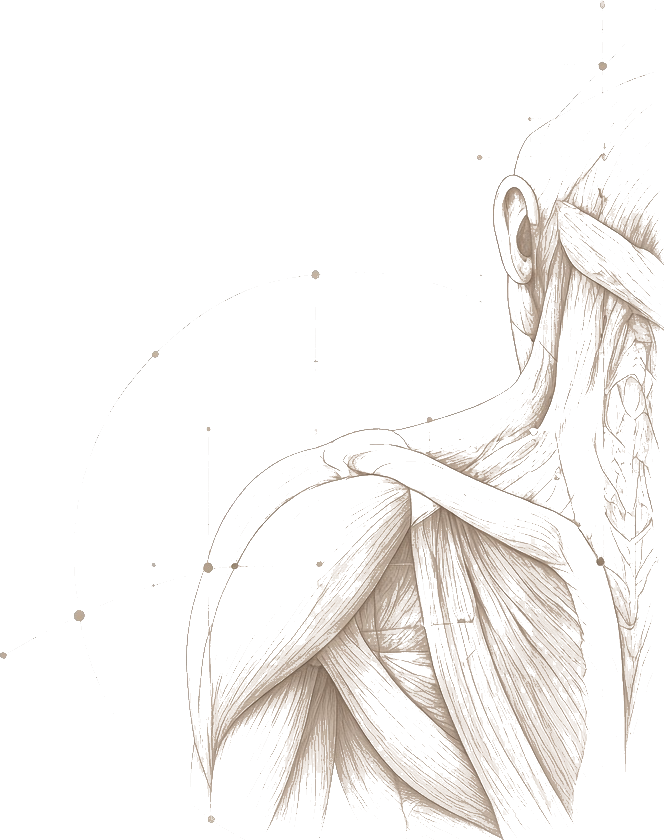
Four muscles (supraspinatus, infraspinatus, teres minor and subscapularis) surround the head of the humerus and keep it centred as you move your arm. They work together with the muscles that control the shoulder blade, which is why the shoulder is assessed as a whole.
Common symptoms
- Pain on the outside of the shoulder or upper arm when lifting the arm sideways or forwards.
- Pain when sleeping on that shoulder or at night.
- Difficulty combing your hair, dressing, reaching up or reaching behind your back.
- A feeling of weakness when holding objects away from the body.
Common causes
| Situation | Example |
|---|---|
| Overload tendinopathy | Sudden increase in training, overhead work |
| Age-related changes | Tendons can change in ways that do not always hurt |
| Partial or full tear | After a fall or effort, or gradually |
| Associated factors | Low shoulder-blade strength or control, sustained postures (see shoulder pain and desk work) |
A finding on a scan does not always explain the pain, so it is interpreted together with the physical examination.
When to see a doctor first
- Sudden loss of strength to lift the arm after a fall or a pull.
- Deformity, a hard blow or suspected dislocation or fracture.
- Fever, redness or warmth in the shoulder.
- Pain with tingling or weakness running down the arm, or pain that does not change with movement.
- Left shoulder pain with shortness of breath, sweating or chest pressure: this is an emergency.
How physiotherapy helps
- Assessment: when it hurts, which movements trigger it, strength, mobility and shoulder-blade control.
- Load management: temporarily modifying what irritates it, without stopping movement.
- Progressive [therapeutic exercise](/es/herramientas/ejercicio-terapeutico): rotator and shoulder-blade strength, at a dose the shoulder tolerates, progressed by stages.
- Manual therapy when it helps you move with less pain, as a complement to exercise.
- Home exercises in the my exercises portal and reassessments to decide whether to continue, adjust or refer.
Rotator cuff exercises: what to know
- They usually include external and internal rotation with a band, controlled raises and shoulder-blade work.
- Some discomfort during exercise can be acceptable if it does not increase the next day; if it gets worse, the plan is adjusted.
- Progression matters more than the number of exercises.
- Avoid copying generic routines after recent surgery or with a confirmed tear: follow your surgeon's and physiotherapist's instructions.
After rotator cuff surgery
Post-operative rehabilitation usually goes by stages: protection (sometimes with a sling), mobility, strength and return to activities. Your surgeon sets the timing based on the repair.
See our physiotherapy for shoulder pain in Medellín service.
Frequently asked questions
Can the rotator cuff recover with physiotherapy? Many rotator cuff problems, such as tendinopathy or some partial tears, are usually managed first with progressive, guided exercise. If there is a significant tear or no progress, the orthopedic doctor decides whether other options are needed. Response is individual. Which exercises help the rotator cuff? The most common are progressive strengthening for the rotators and shoulder-blade muscles, plus tolerable mobility work. Dose and order depend on your pain and your assessment; copying generic routines is not advisable if pain increases. Should I stop moving my shoulder? Complete rest is generally not recommended unless your doctor says so (for example, after surgery). Usually you temporarily modify the activities that irritate it and keep the movement the shoulder tolerates. When do I start physiotherapy after rotator cuff surgery? Your surgeon decides, based on the repair. Rehabilitation usually moves through stages (protection, mobility, strength and return) following the healing times your surgeon sets. Do I need a doctor's referral? Not at Esencial. If you have an ultrasound, MRI or instructions from your doctor, bring them to the assessment.
Book your assessment
If your shoulder keeps you from sleeping, working or training, an assessment helps you understand what is going on and set a realistic plan. Book your 60-minute assessment via WhatsApp or at /es/agenda. Private, one-to-one (1:1) care at Torre Médica El Tesoro 2, El Poblado, Medellín. We also see patients in English.
This content is for educational purposes and does not replace an assessment by your doctor or physiotherapist.